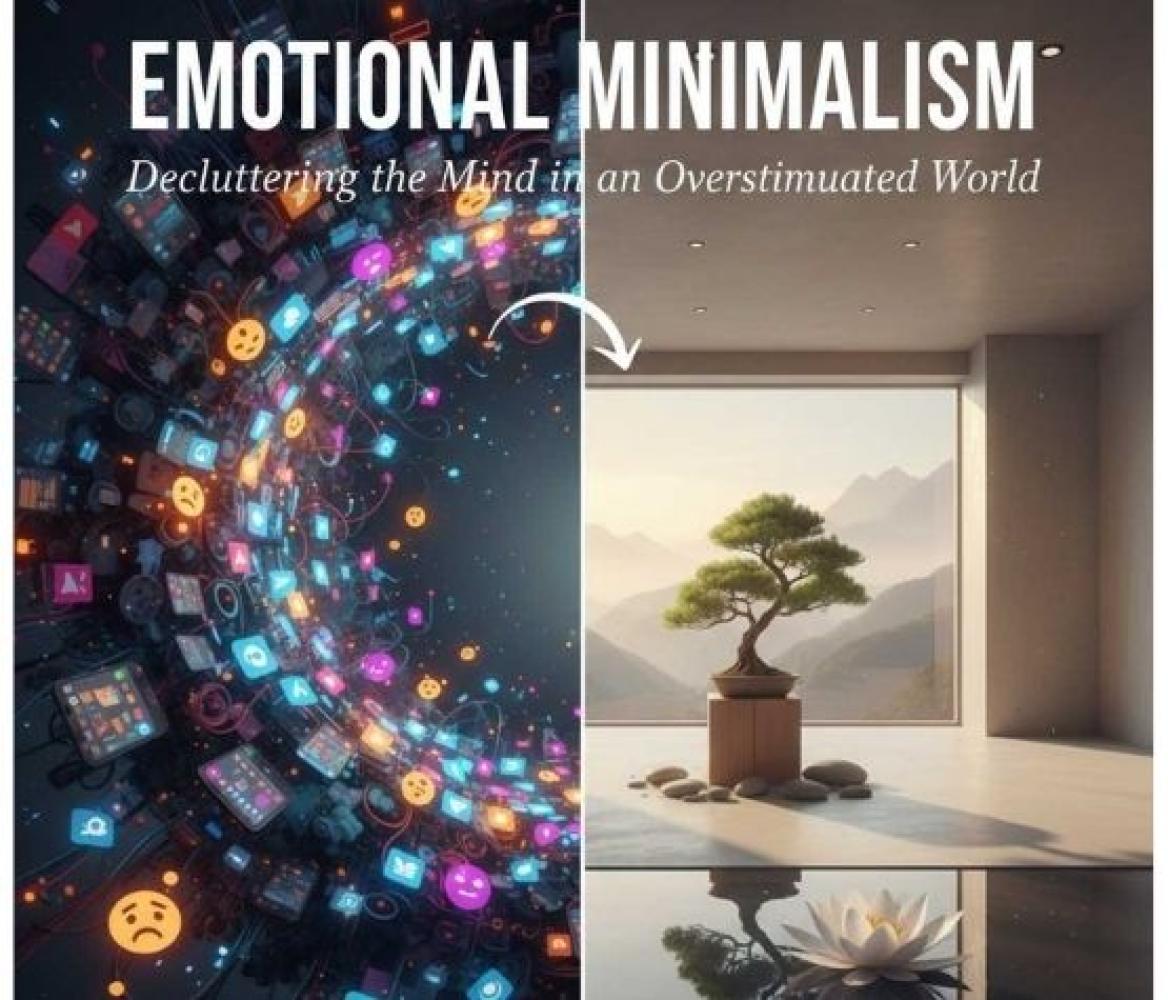
We live in a world where everything is loud — our phones, our schedules, our thoughts, even our expectations. Every day, we handle so many emotions, so much information, and so many pressures that our minds start feeling like overcrowded rooms.
And just like a cluttered room makes it harder to breathe, a cluttered emotional space makes it harder to feel.
That’s where emotional minimalism comes in — not about avoiding emotions, but about reducing the unnecessary weight we carry in silence.
Emotional minimalism is the practice of simplifying your inner world.
It means making space for what matters, letting go of what drains you, and choosing clarity over chaos.
It’s not Emotional Avoidance, It’s Emotional Hygiene.
It’s asking yourself:
We tidy up our homes. We organize our desks.
But our minds — the place we live every second — remain crowded.
From constant notifications to endless comparisons, emotional clutter grows in small, everyday ways:
We consume more in a day than previous generations did in weeks. But we rarely pause to label or understand what we feel.
We’ve become multitaskers by necessity — juggling work, relationships, self-help, growth, tasks, pressures. Everything feels urgent.
We hold on to guilt, old conversations, tiny rejections, unanswered messages, expectations that were never ours to carry.
We compare ourselves to curated versions of others, creating emotional noise we never meant to invite in.
Even rest is filled with screens. Our minds are “off work” but never really off-duty.
The result?
A mental world that feels stuffed, chaotic, and heavy.
Emotional clutter isn’t always dramatic. It appears in everyday ways:
It’s the emotional version of a messy drawer — everything gets jumbled together.
Emotional minimalism is a quiet shift, but a powerful one. It helps you:
Take 30 seconds between tasks to breathe.
Not to relax — but to reset.
Every piece of content enters your emotional space.
Unfollow. Mute. Step back. Your mind isn’t a storage unit.
Half the clutter comes from unnamed emotions.
Name them — it gives them boundaries.
The pressure to reply instantly.
The pressure to have everything figured out.
The pressure to be “on.”
Let these go; they aren’t yours to carry.
Once a week, sit with yourself for ten minutes.
Journal.
Meditate.
Or just stare out of a window.
Anything that brings your mind back to itself.
Relationships, habits, commitments — choose the ones that add value to your emotional space.
It isn’t about shrinking your emotional life.
It’s about making space for what truly deserves a home in your heart.
In an overstimulated world, peace isn’t found in doing more.
It’s found in releasing the excess — the noise, the heaviness, the expectations.
When you declutter your emotional world, you rediscover something beautiful:
Your mind can breathe again.
And so can you.

It’s the moment every parent dreads, yet secretly hopes for. Your teenager walks into the room, shif...
Read More
Life leaves its marks on us, doesn’t it? Not just the visible ones—the faded childhood scrape on a k...
Read More
We’ve all been there. It’s 2:00 AM, you’re three hours deep into a Insta scroll-hole, or maybe you’r...
Read More