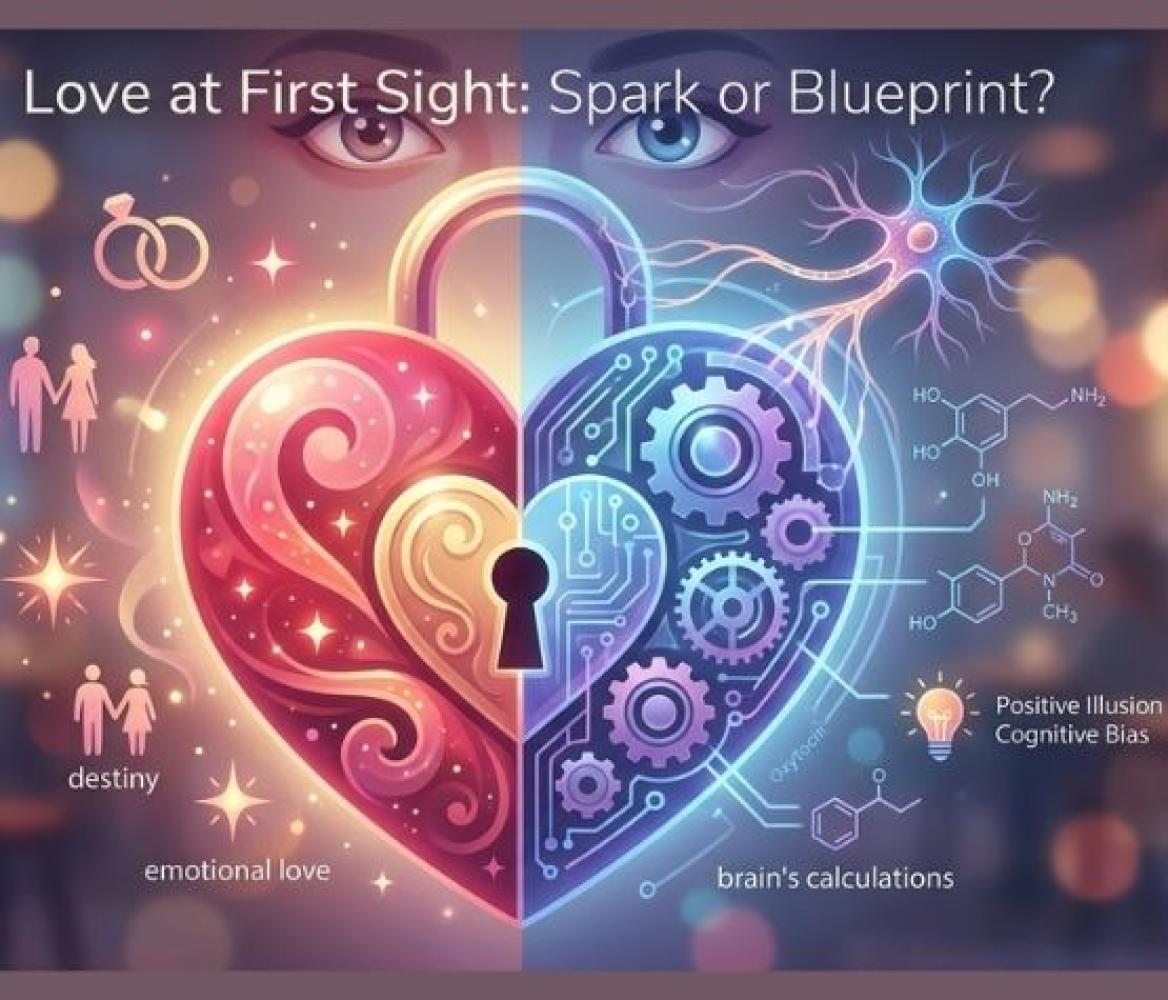
The concept of "love at first sight" has fueled centuries of poetry, power ballads, and rom-coms. But when you lock eyes with a stranger across a crowded room and feel that electric jolt, is it a soulmate connection or just a highly coordinated neurochemical prank?
Science suggests the answer is a bit of both. Here is the breakdown of what is actually happening when your heart skips a beat.
Before you even say "hello," your brain has already run a complex diagnostic. Research shows it takes about thirteen-hundredths of a second for the brain to determine if someone is attractive.
This isn't just about vanity; it’s an evolutionary shortcut. Your brain is scanning for "fitness indicators"—symmetry, health, and even MHC (Major Histocompatibility Complex) genes via pheromones—to see if this person is a viable biological match.
When you experience that "thunderbolt" moment, your brain isn't thinking; it’s reacting. It releases a potent cocktail of chemicals that mimic the effects of certain stimulants:
This is where the "trickery" comes in. Cognitive psychology identifies a phenomenon called the Halo Effect. When we find someone physically attractive, our brains lazily assume they also possess other positive traits, like kindness, intelligence, and honesty.
Essentially, you aren't falling in love with who they are—because you don't know them yet. You are falling in love with a high-definition projection of your own ideals.
If you ask a couple who has been together for 40 years, they will often swear they fell in love at first sight. However, studies on "memory reconstruction" suggest that happy couples often backdate their feelings.
When you love someone deeply in the present, your brain rewrites the history of your first meeting to make it feel more destiny-driven than it actually was. This is known as Positive Illusion.
Is it "Love"? Probably not. Love usually requires intimacy, shared history, and commitment.
Is it "Lust at First Sight" or "Attraction at First Sight"? Absolutely. The physical and chemical reactions are 100% real. While your brain might be playing tricks by "filling in the blanks" of their personality, that initial spark is the essential biological "hook" that gets you close enough to build a real story.

Imagine, for a moment, the space before this life began. No weight in your chest, no ticking clock,...
Read More
Just when you thought the digital dating world couldn't get any spookier than ghosting, a new trend...
Read More
Have you ever found yourself replaying a five-second conversation in your head for hours? Or perhaps...
Read More