
We live in a world that worships "the new." We want the latest tech, the fastest updates, and the most concise captions. But in our rush toward the future, we are leaving behind a generation that is living in a different kind of time: the time of the echo.
Have you ever sat with an older person and heard them tell the same story three times in twenty minutes?
Perhaps you felt that familiar prickle of impatience. You might have thought, “Why are they repeating this? I already heard the part about the garden. I already know about the neighbor.” You might have even cut them off or finished their sentence just to move the conversation along.
But if we look closer, that repetition isn't a failure of memory. It is a symptom of prolonged isolation.
When a person spends days—sometimes weeks—without a meaningful conversation, their thoughts don't stop. They continue to process their life, their memories, and their worries. But without an audience, that processing happens entirely in a vacuum.
They talk to the walls. They talk to the radio. They talk to themselves.
By the time they finally get a "live" person to listen to them, that story has been playing on a loop in their head for so long that they genuinely lose track of where the internal monologue ends and the external conversation begins. They aren't repeating it because they think you’re forgetful; they are repeating it because they have been the only person listening to it for a very long time.
Psychologists often talk about "skin hunger"—the biological need for human touch. But there is also "witness hunger." We all have a deep, fundamental need to have our experiences witnessed by another human being. It’s how we know we still exist. For an elderly person who has lost their spouse, their career, or their mobility, their stories are the only "territory" they have left.
When they repeat a story, they are trying to anchor themselves in the world. They are saying, "I was here. This happened. I matter."
The next time you find yourself trapped in a repetitive loop with an older soul, try to shift your perspective.
It is a quiet tragedy to be full of words and have nowhere for them to land.
This week, I challenge you to find an "old soul" in your orbit. A neighbor, a relative, or even the person in line at the grocery store. Give them your eyes. Give them your ears. And if they tell you the same thing twice, let them.
Because one day, we will all be the ones with stories to tell, hoping that someone is patient enough to let us finish.

Imagine, for a moment, the space before this life began. No weight in your chest, no ticking clock,...
Read More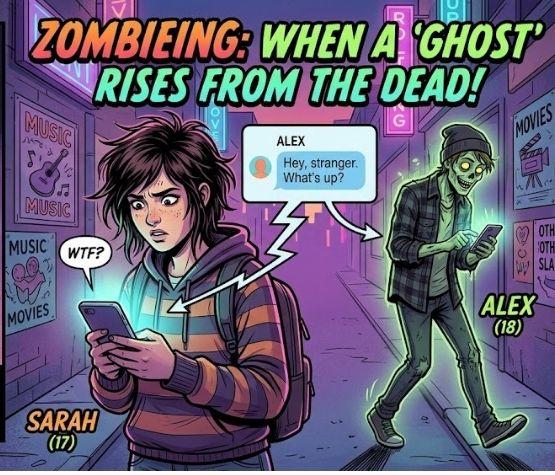
Just when you thought the digital dating world couldn't get any spookier than ghosting, a new trend...
Read More
Have you ever found yourself replaying a five-second conversation in your head for hours? Or perhaps...
Read More