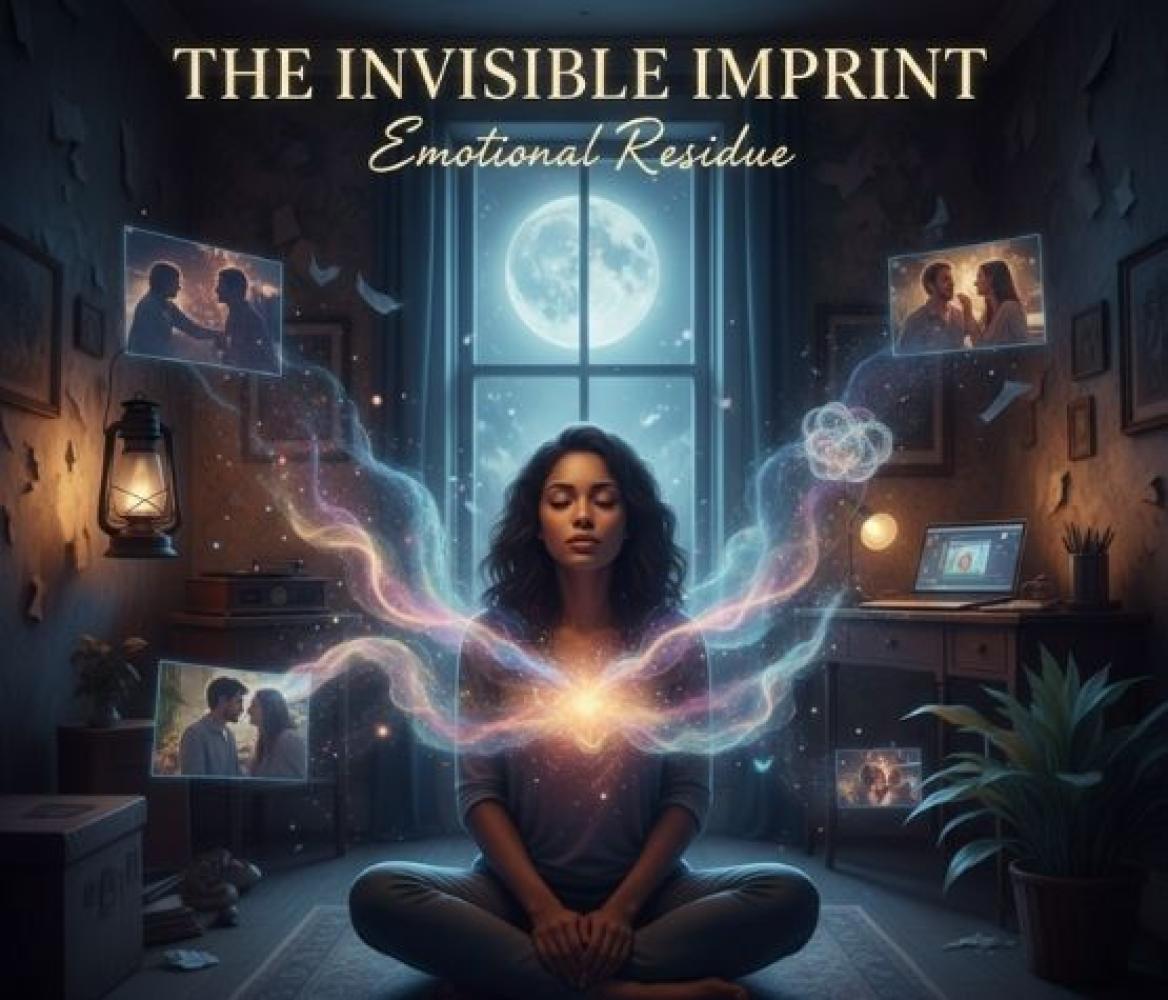
Ever walked into a room after an argument and felt the tension hanging in the air, even though no one was speaking? Or picked up an old photograph and felt a wave of joy, or perhaps a pang of sadness, long after the moment it captured? What you’re experiencing is more than just memory; it’s a brush with emotional residue.
This isn't just a poetic idea; there's a growing body of research exploring how our emotions, both our own and those we encounter from others, leave an invisible imprint – a kind of energetic fingerprint – on us, our environments, and even our objects. Let's dive into the fascinating science behind this "emotional residue."
Think of it like this: when you burn wood, you're left with ash and smoke. When you cook, the smell lingers. Emotions, especially intense ones, aren't just fleeting internal states; they are powerful psychobiological events that trigger a cascade of chemical and electrical activity in our brains and bodies.
Emotional residue refers to the lasting energetic or psychological trace left behind by these experiences. It’s the lingering sense, the subtle vibration, or the subconscious influence of past emotions in a present context. It's often "pre-cognitive," meaning you feel it before you can logically identify it.
While we might not see a scientific instrument explicitly measuring "emotional residue" (yet!), several areas of research help us understand its mechanisms:
Every intense emotional experience carves a pathway in our brain. Strong emotions, especially negative ones, can make these neural pathways more robust. Even when the initial event is over, the brain is primed to reactivate that emotional state. This isn't just recalling a memory; it's a re-experiencing that can flood your system with the associated stress hormones or feel-good chemicals, creating a "residue" that affects your current mood and behavior.
Our brains are constantly making associations. If you had a consistently negative experience in a particular room, or with a specific person, your brain "primes" you to anticipate that emotion the next time you encounter that stimulus. The room itself doesn't hold the anger, but your brain associates the physical space with the emotional state, creating a felt sense of residue.
Have you ever yawned just because someone else did? Emotions are incredibly contagious. Studies show that we can unconsciously mimic the facial expressions, postures, and even physiological states (like heart rate variability) of those around us. This "emotional contagion" means we literally absorb some of the emotional states of others, carrying their residue with us even after they've left. Think of it as secondhand emotion.
This is a cutting-edge field exploring how our environment and experiences can actually "turn on" or "turn off" certain genes, affecting how they are expressed. While still early, some theories suggest that very profound, traumatic emotional experiences might leave an epigenetic mark that could influence not just the individual, but potentially even future generations. This is a powerful, long-lasting form of "residue."
The lingering anxiety from a past trauma, the chronic stress from a demanding job, or the persistent joy from a cherished relationship all leave internal residue that shapes our default emotional state.
That "heavy" feeling in a hospital, the "vibrant" energy of a concert hall, or the "peaceful" calm of a meditation space. Rooms and places absorb the collective emotions poured into them over time.
The unspoken history, the unresolved arguments, the lingering affection – all contribute to an emotional residue that colors every interaction.
Understanding emotional residue isn't about becoming overwhelmed by unseen forces; it's about empowerment. Once you acknowledge its existence, you can actively work to clear or cultivate it:
The science of emotional residue teaches us a quiet but powerful truth: our inner world never stays inside us. It settles into our spaces, our relationships, and the way we move through life. When we begin to notice these invisible imprints, we gain a rare choice — to live on autopilot or to respond with awareness. And in that awareness, we don’t just change our surroundings; we slowly create environments that feel safer, lighter, and more healing — not only for ourselves, but for everyone who enters our world.
It’s the moment every parent dreads, yet secretly hopes for. Your teenager walks into the room, shif...
Read More
Life leaves its marks on us, doesn’t it? Not just the visible ones—the faded childhood scrape on a k...
Read More
We’ve all been there. It’s 2:00 AM, you’re three hours deep into a Insta scroll-hole, or maybe you’r...
Read More