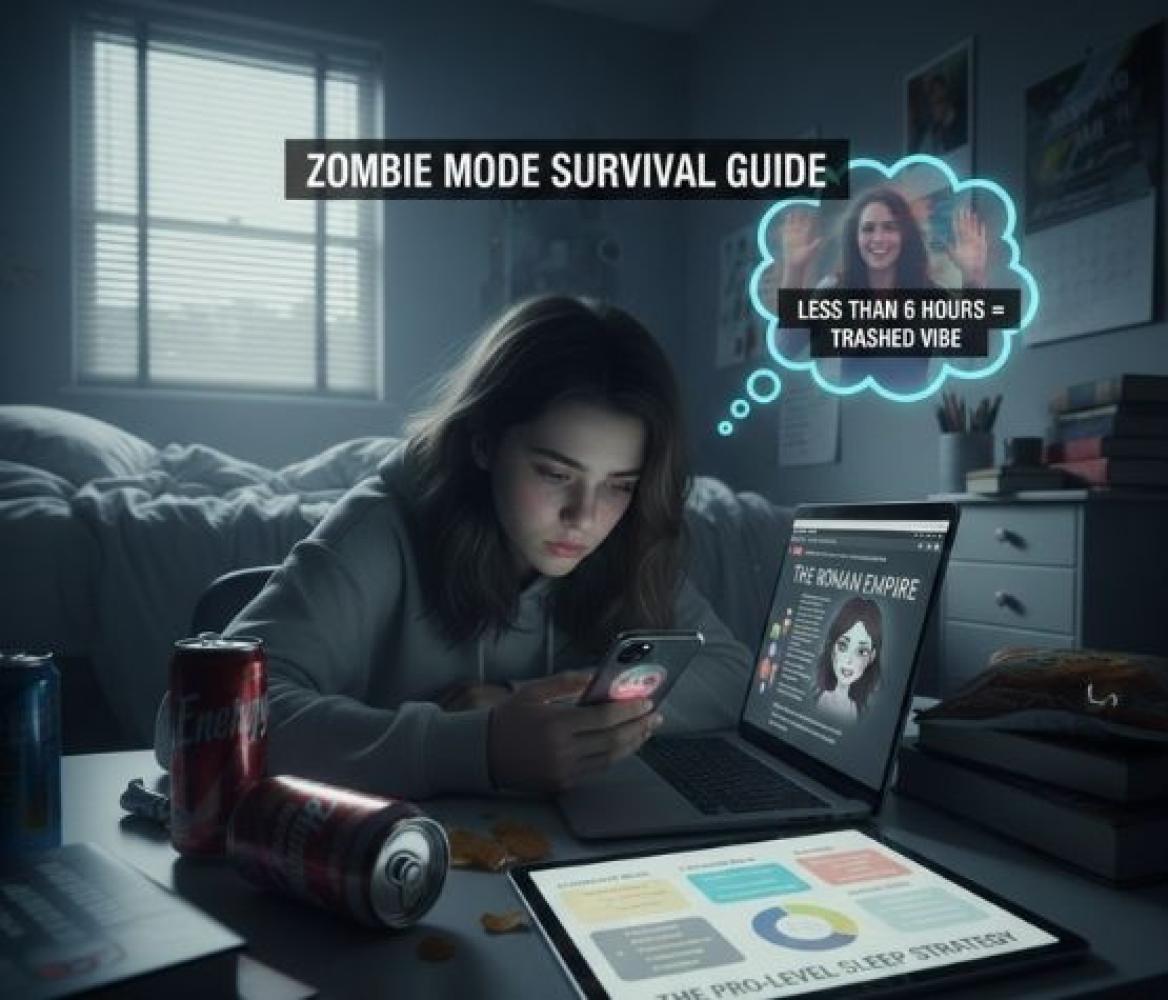
We’ve all been there. It’s 2:00 AM, you’re three hours deep into a Instagram scroll-hole, or maybe you’re actually grinding on that history project that’s due in six hours. You think, "I’ll just grab a large iced coffee tomorrow; I’ll be fine."
But here’s the tea: when you sleep less than six hours, you aren’t just "tired." You’re essentially putting your brain and body through a glitchy software update that never finishes.
Your mom might nag you about it because she’s, well, your mom—but the science behind what happens to your body is actually pretty wild. Let’s break down what’s really going on under the hood when you skimp on sleep.
Ever tried to run a high-graphics game on 1% battery? That’s your brain on five hours of sleep.
Sleep regulates the hormones that tell you when to eat.
Ghrelin (the "I’m hungry" hormone) spikes.
Leptin (the "I’m full" hormone) crashes.
They call it "beauty sleep" for a reason. While you sleep, your body pumps out growth hormones to repair skin and muscles.
If you’re tired of hearing "Go to bed!" every night, the best way to get people off your back is to actually have a plan. You don’t need to sleep 10 hours a night, but moving from five to seven can change your entire life.
Why it works: Sleep cycles last about 90 minutes. Try to time your wake-up so you aren't waking up in the middle of deep sleep.
Why it works: Charge your phone across the room 30 minutes before bed. The blue light literally tells your brain the sun is up.
Why it works: If your brain is racing about tomorrow’s stress, write it all down on a physical piece of paper. Get it out of your head.
Why it works: A quick warm shower before bed drops your core body temperature afterward, which signals your brain it’s time to pass out.
This schedule assumes a 07:00 AM wake-up call for school/ college. Adjust the times based on your specific schedule.
Finish the "Heavy" Stuff: Try to get the hardest homework out of the way now. Your brain starts losing its edge after this.
The Brain Dump: Spend 5 minutes writing down a "Tomorrow List." If it’s on paper, your brain doesn't have to "hold" it all night, which stops that 11:00 PM anxiety spiral.
Night Shift Mode: Turn on the "Blue Light Filter" on all devices.
The "Dopamine Cutoff": Stop scrolling Instagram or playing high-intensity games. These apps are designed to keep your brain "wired," making it impossible to fall asleep even if you’re exhausted. Switch to music, a podcast, or a book.
Cool Your Core: If you can, turn the fan on or crack a window. Your body needs to drop about 1°C to fall into deep sleep.
Phone Across the Room: Plug your phone in far enough away that you have to physically get out of bed to turn off the alarm. This prevents the "just one more video" trap.
Consistency is Key: Even if you don't feel "dead tired," lying in the dark helps your body start producing melatonin (the sleep hormone).
Your VIBE: God Mode: High energy, clear skin, fast reflexes.
Your VIBE: Solid: Good focus, manageable mood.
Your VIBE: Survival Mode: Brain fog, "hangry" feelings, caffeine-dependent.
You’re a teenager; your brain is literally under construction. Depriving it of sleep is like trying to build a skyscraper without enough concrete. You don't have to be perfect, but aim for the "Golden 7." You’ll be funnier, faster, and way less likely to lose your mind over a math test.

It’s the moment every parent dreads, yet secretly hopes for. Your teenager walks into the room, shif...
Read More
Life leaves its marks on us, doesn’t it? Not just the visible ones—the faded childhood scrape on a k...
Read More
Ever walked into a room after an argument and felt the tension hanging in the air, even though no on...
Read More